Four eyes on a robot
TRANSLATED: Two AI agents extracted the same year of statements. Neither was allowed to see the other's work.
That's the set-up in a write-up I read this week. A year of scanned statements had to become a complete transaction record for financial reporting. One agent on its own handed it back with a note to spot-check a few lines, which passes the review straight back to a person.
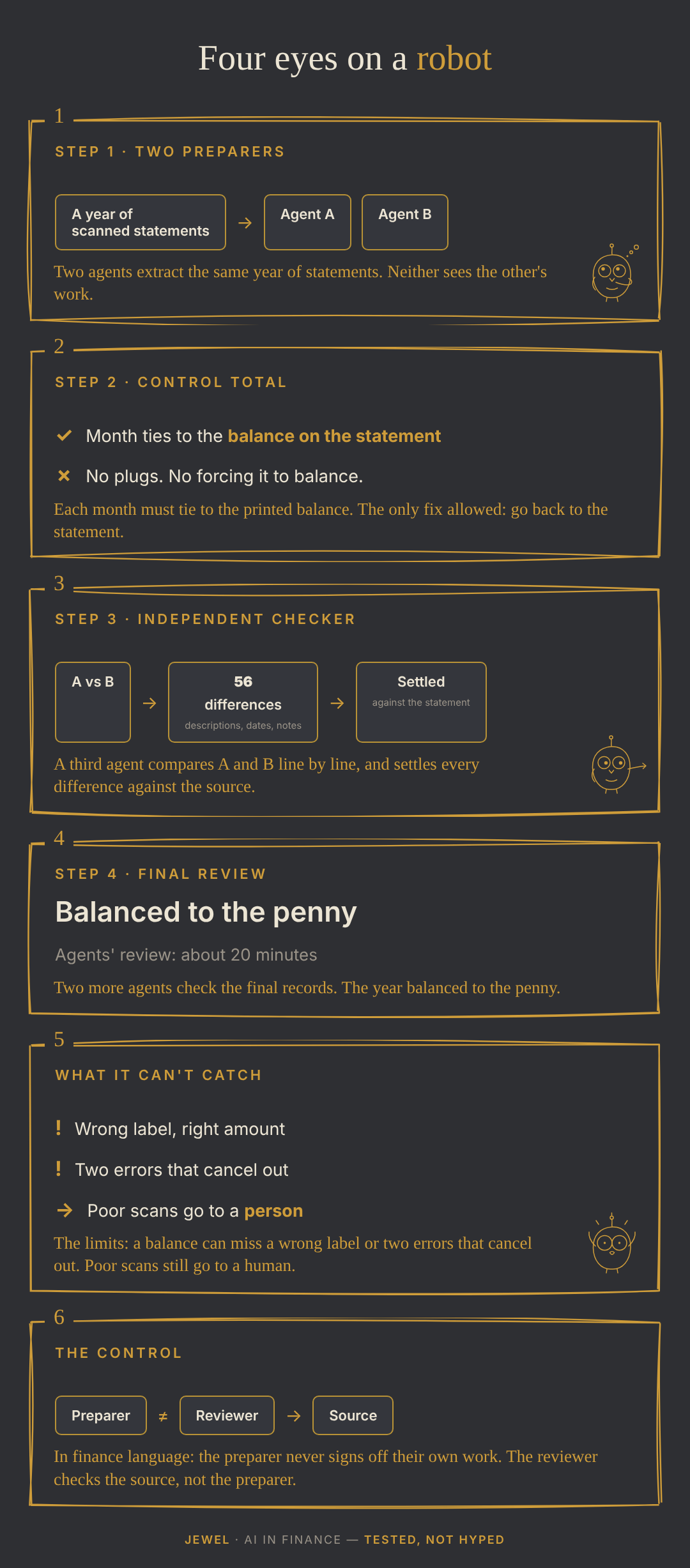
So the method changed. Two agents extracted every month independently, from the same instructions. Each month had to tie to the balance printed on the statement, and the only fix allowed was going back to the statement. A third agent compared the two versions line by line and settled each difference against the source. It was not allowed to force a match. Two more agents checked the final records.
Comparing the two turned up 56 differences in descriptions, dates and notes. The year balanced to the penny, and the agents' review took about 20 minutes.
In finance language, that's a four-eyes control with a control total. The preparer never signs off their own work, and the reviewer checks against the source, not against the preparer.
The author is honest about the limits. A balance catches wrong amounts and missing items, but it can miss a wrong label or two errors that cancel out. Poor scans still go to a human, even when everything agrees.
I call this four eyes on a robot. Which task in your team would you trust to two independent agents and a checker?
← All AI use cases